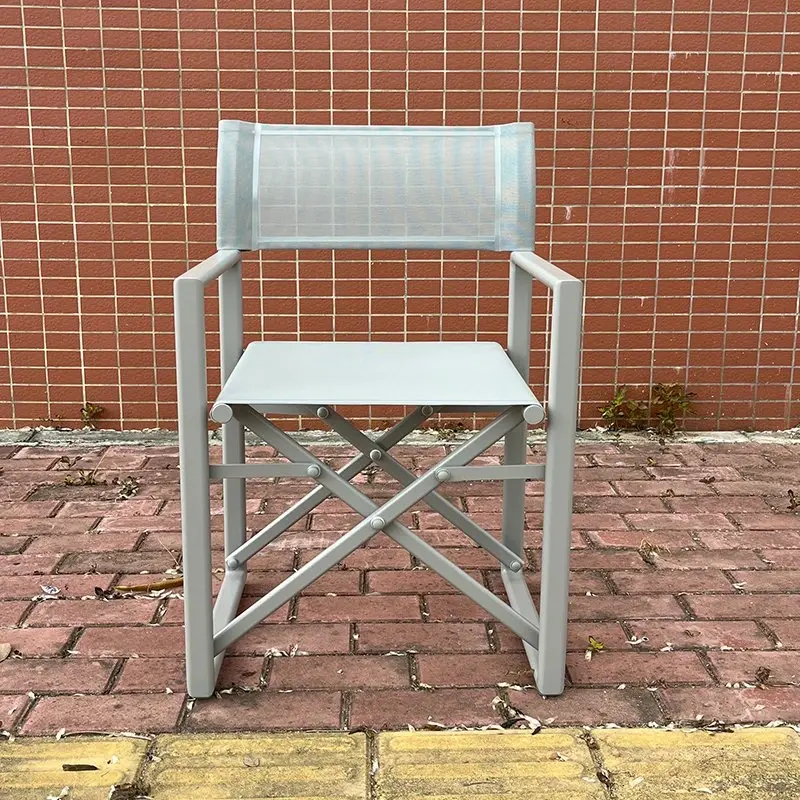
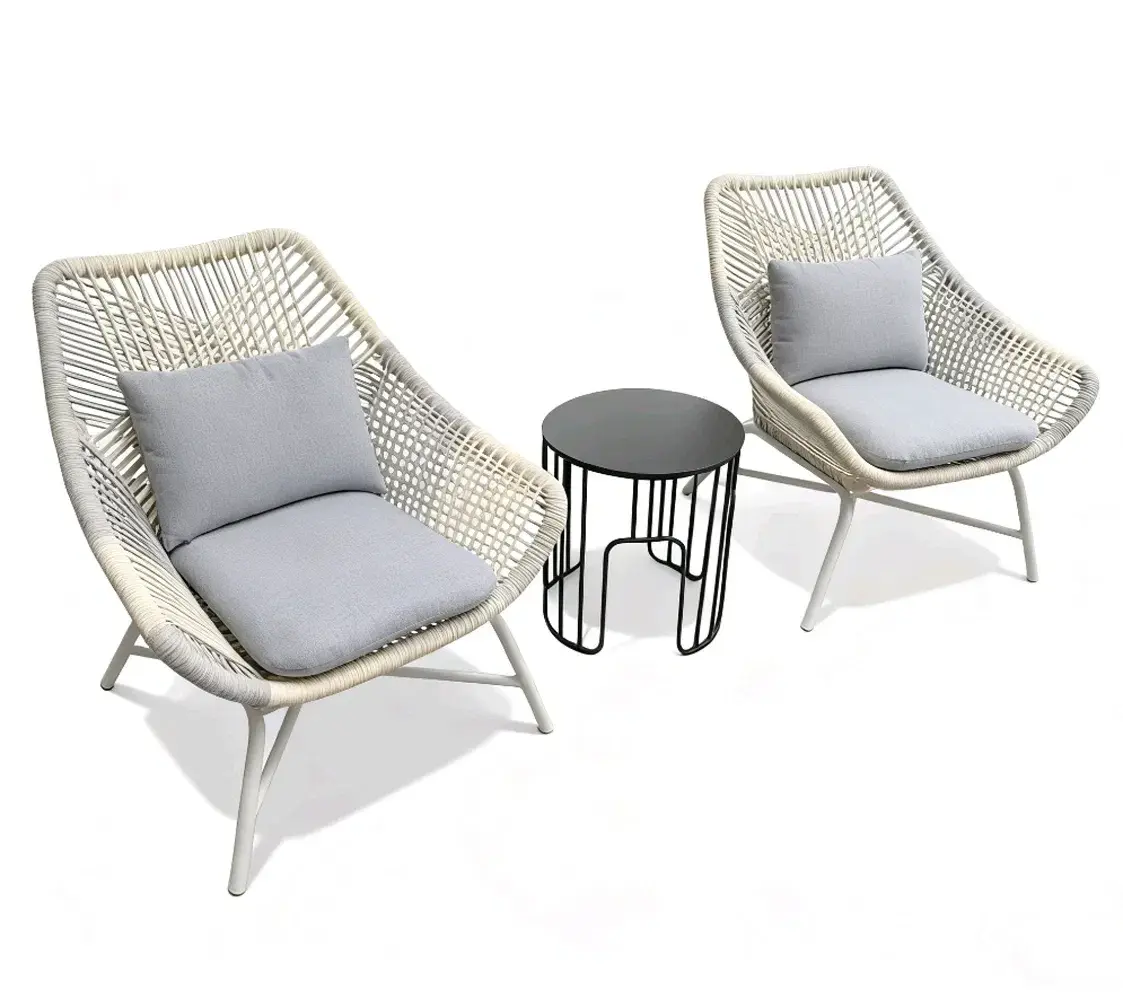
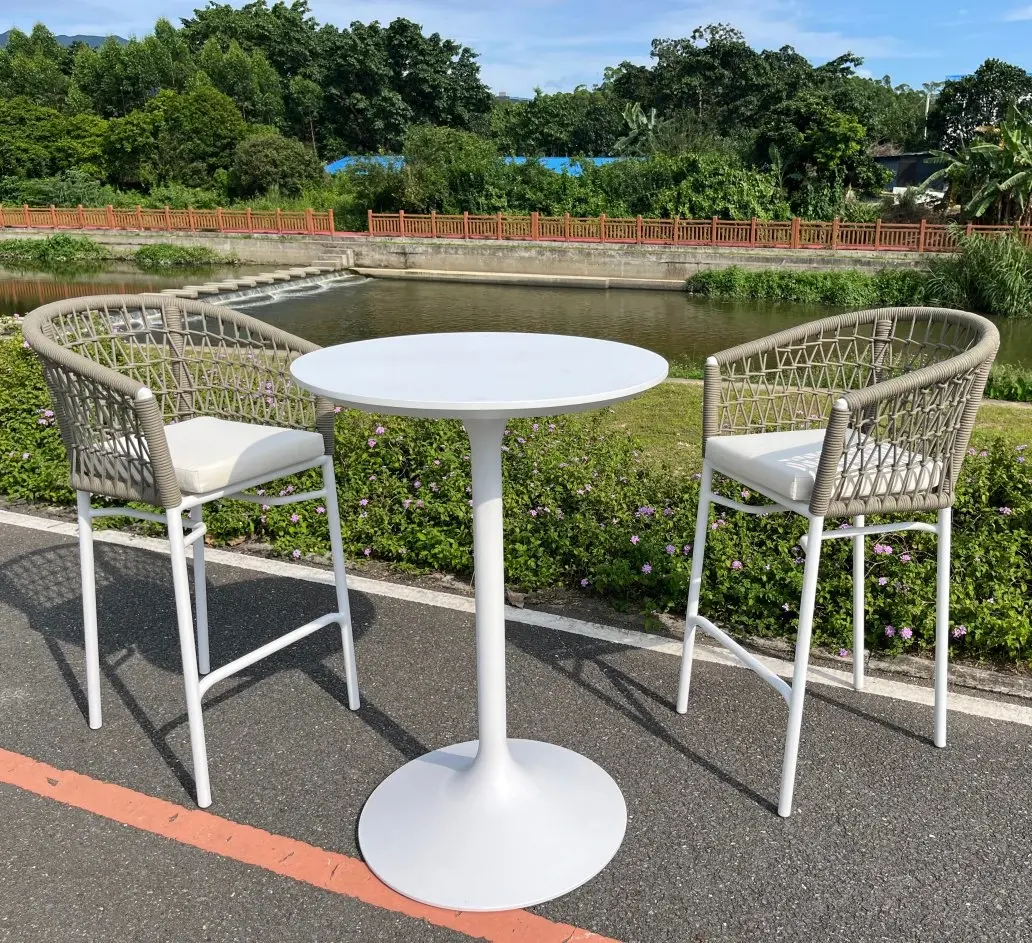
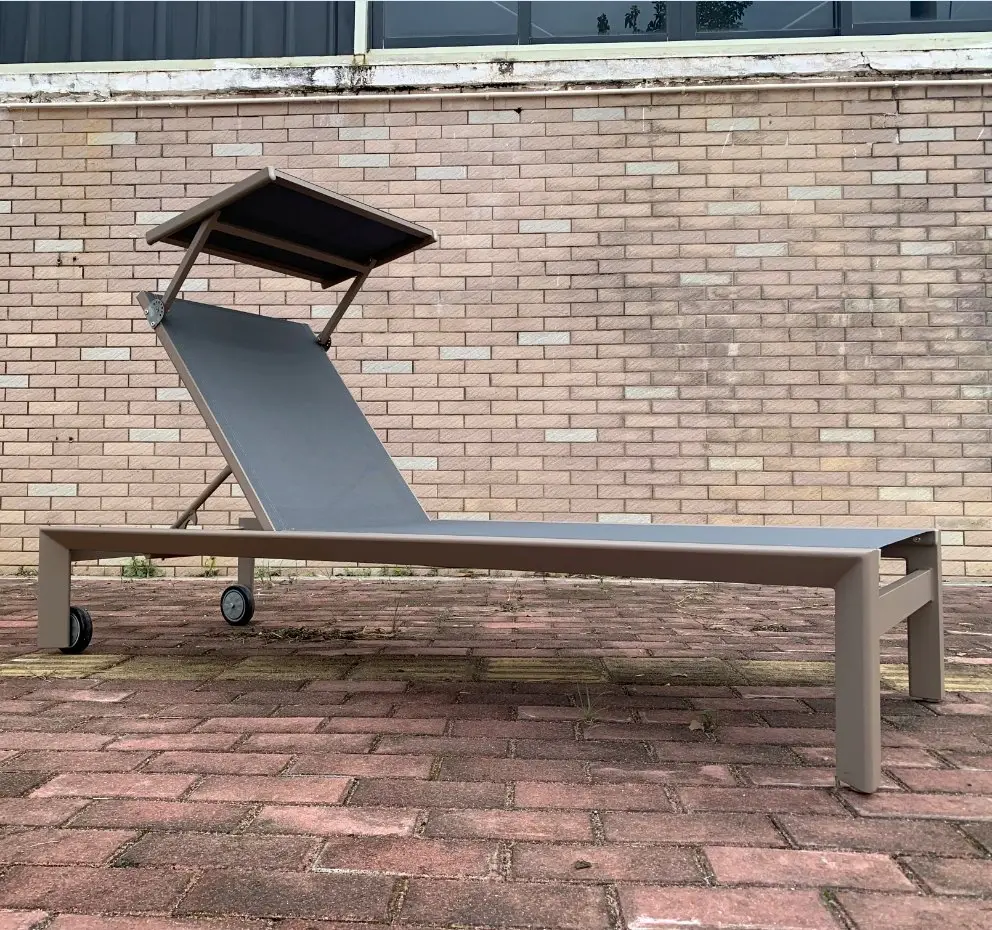
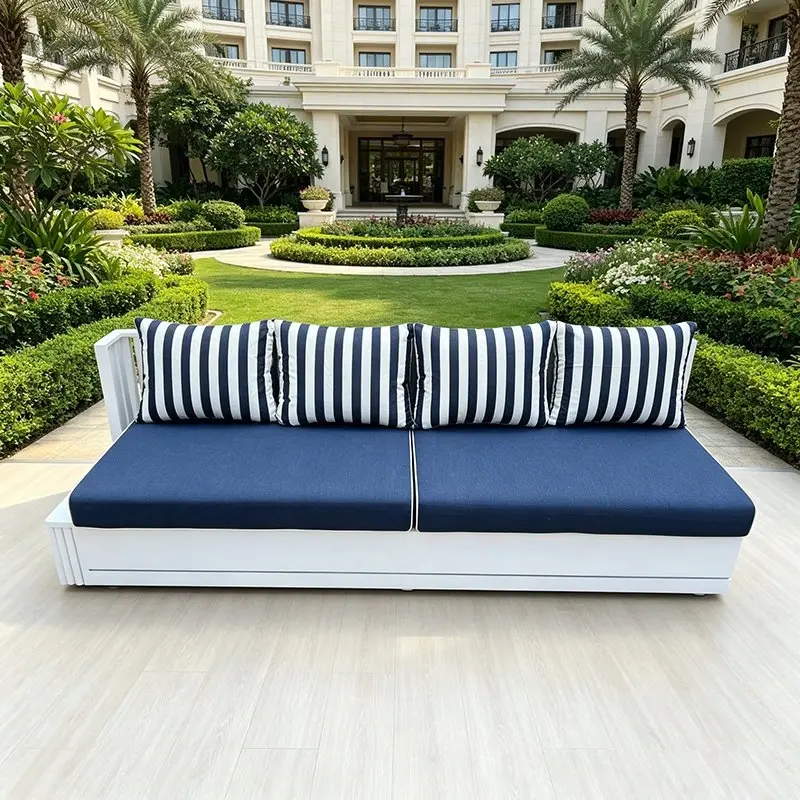
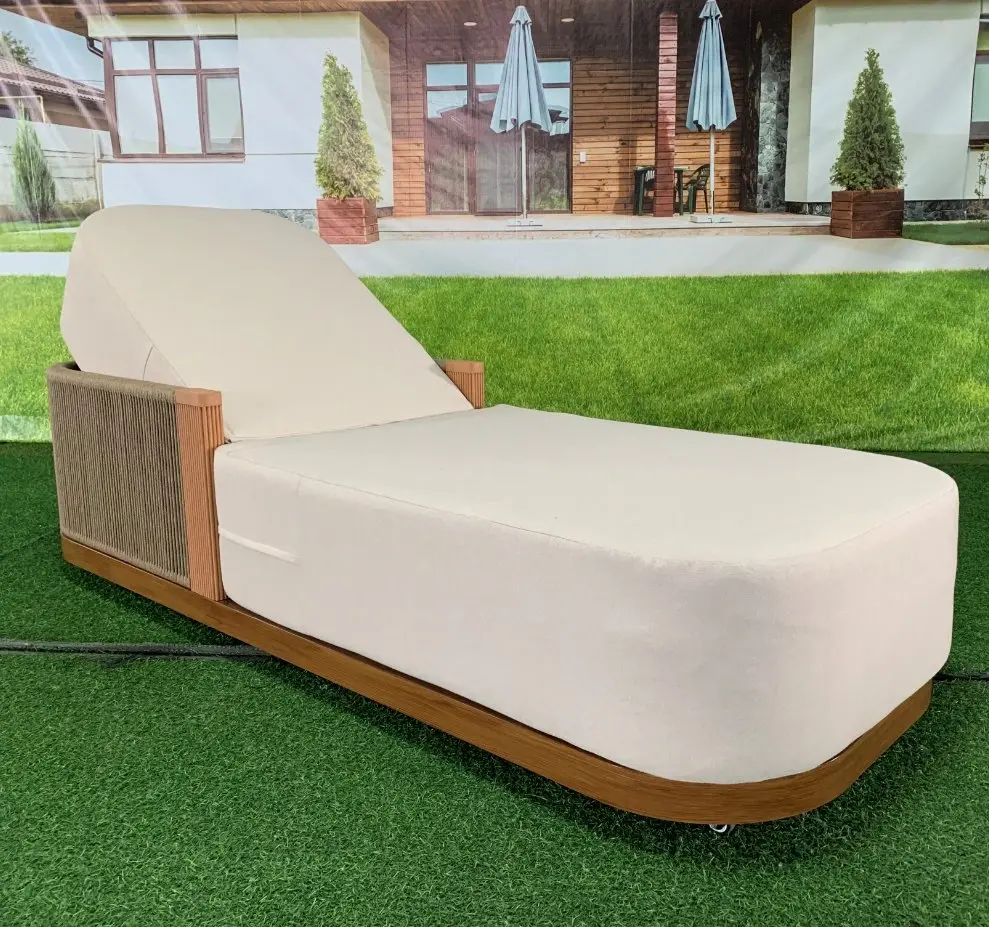
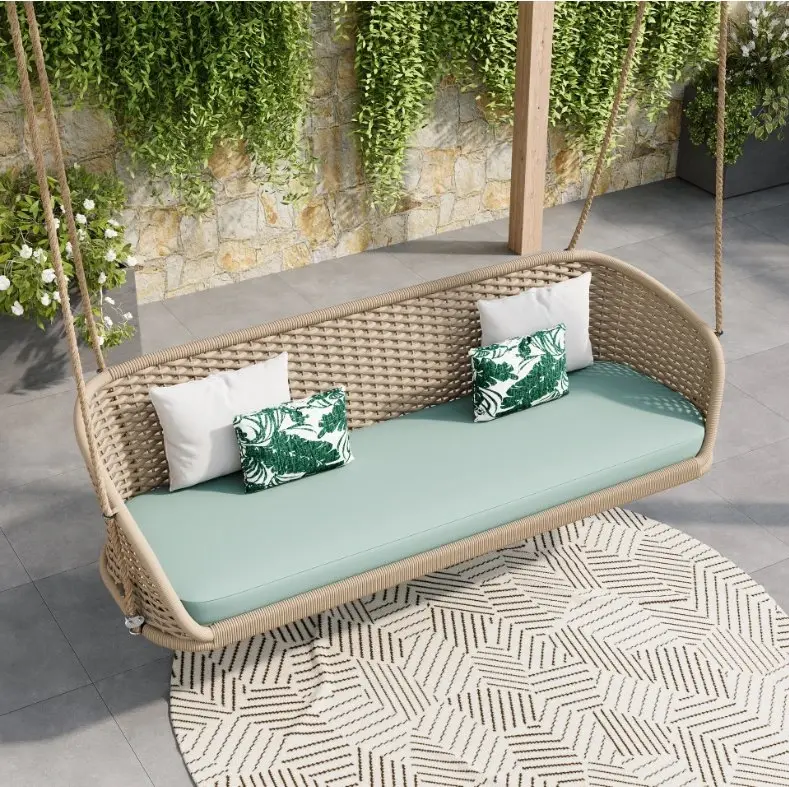
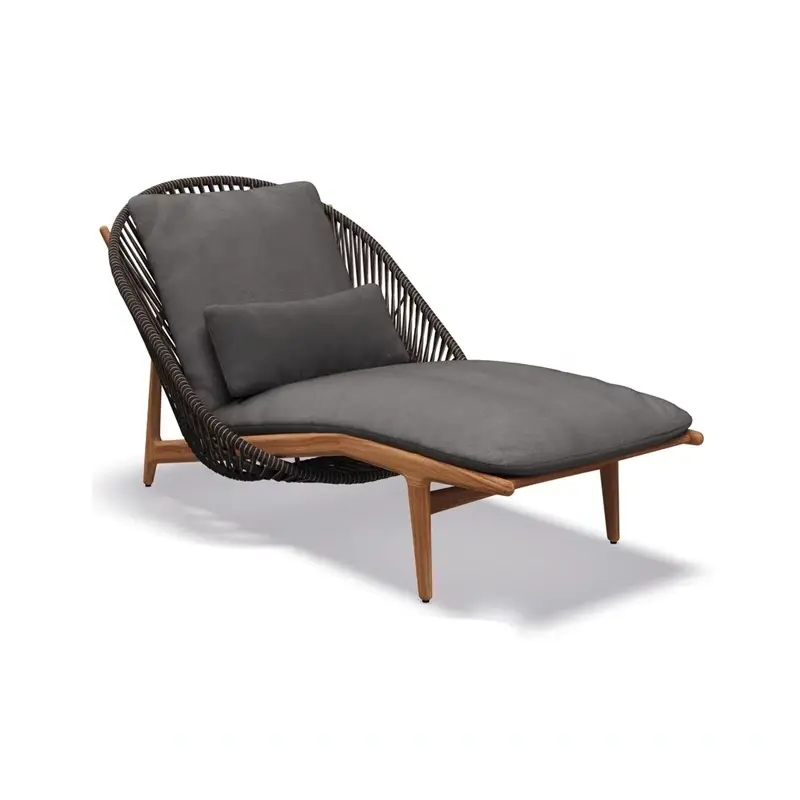
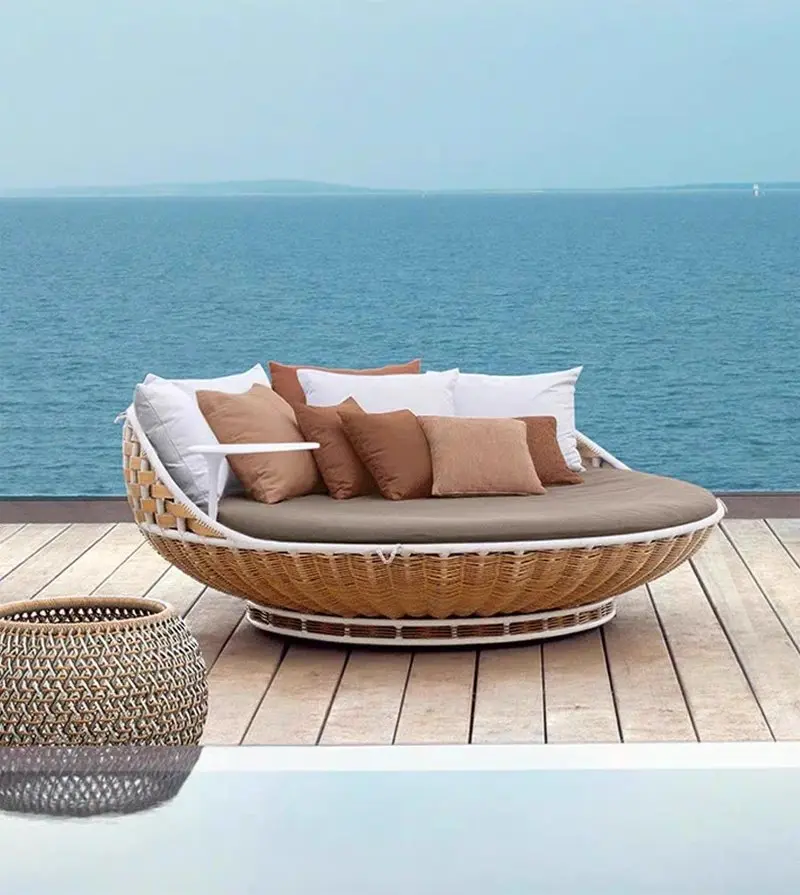
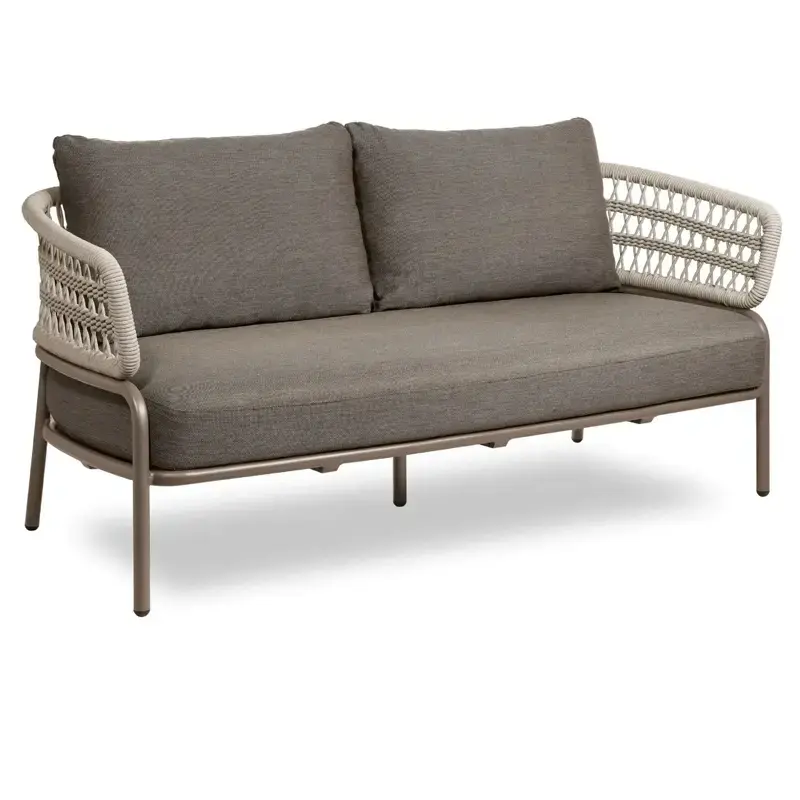
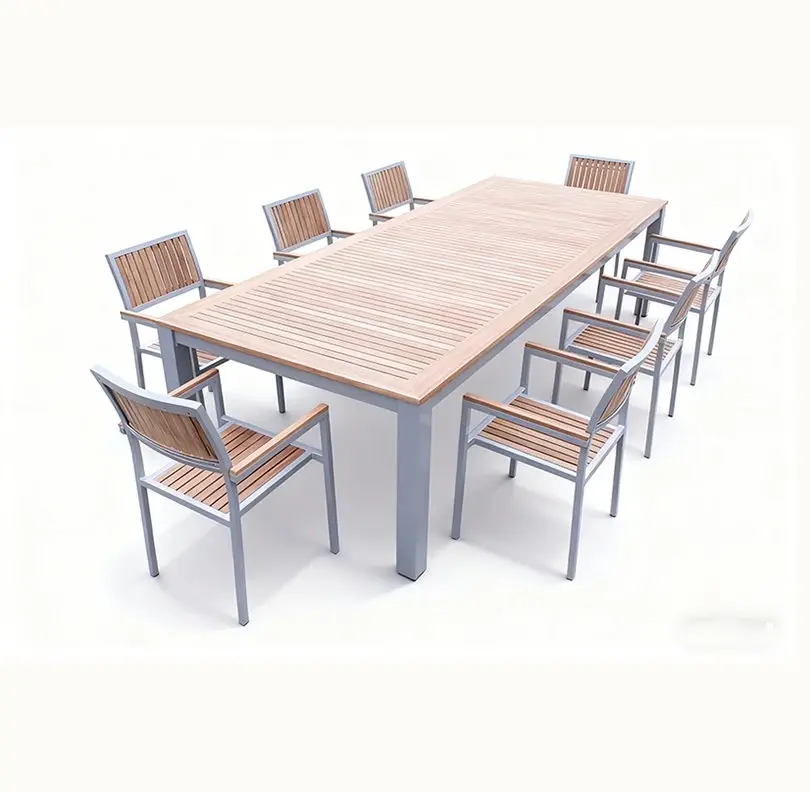
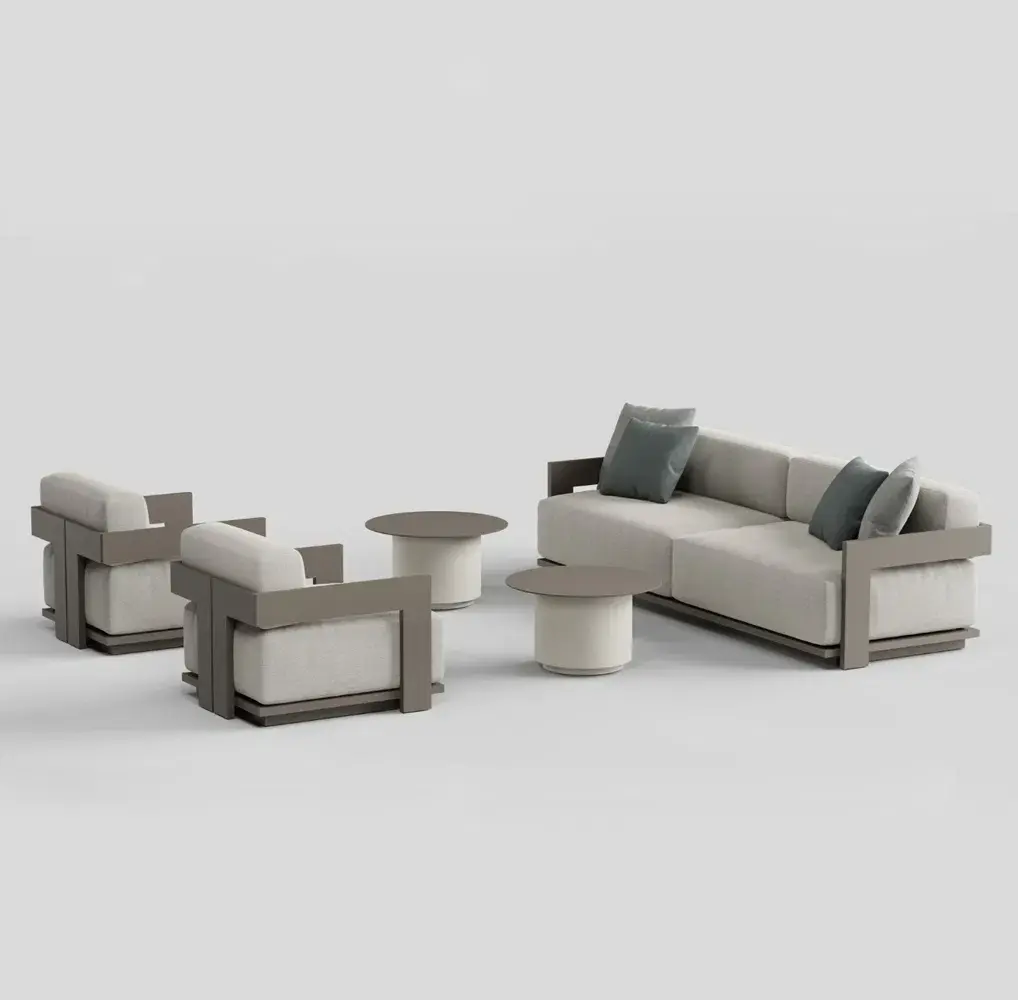
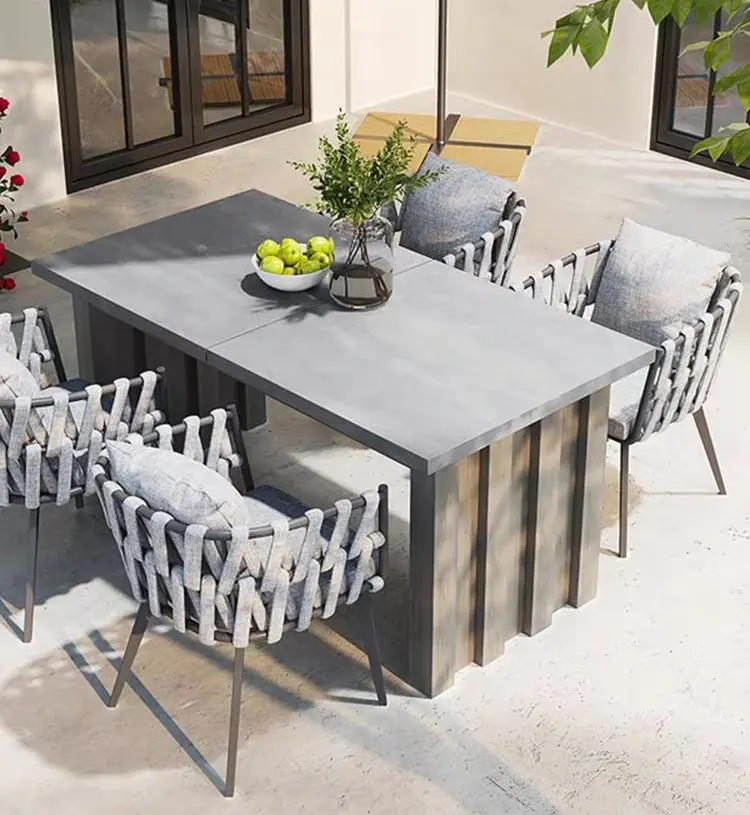
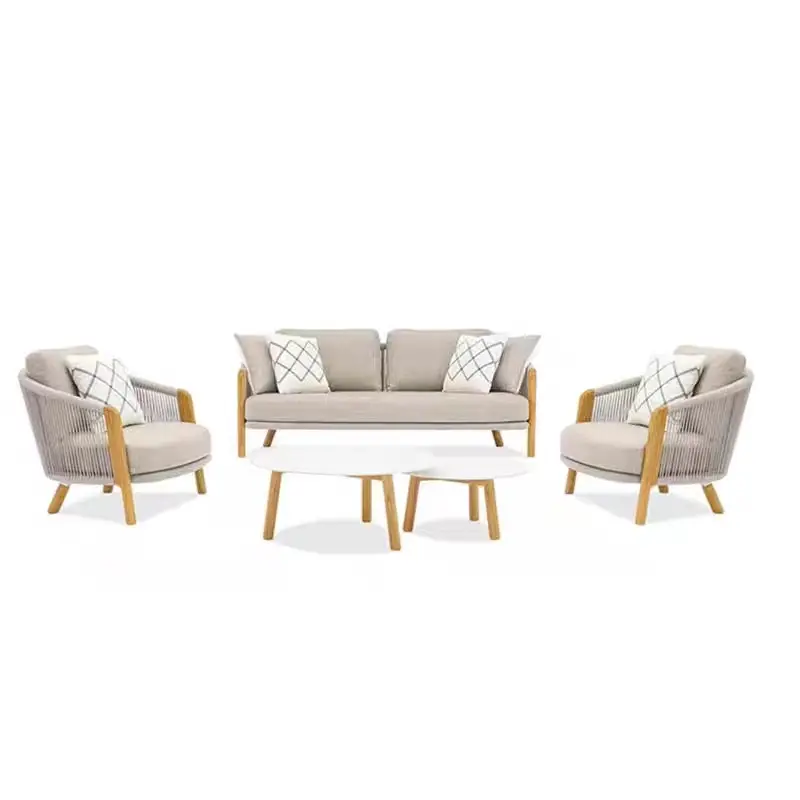
Every piece in our garden and outdoor range, sorted by price. Outdoor furniture is specified against weather rather than against a room, which narrows it to three frames that survive: powder coated aluminium, solid teak, and synthetic rope woven over one of them. Freight here is charged on volume rather than per item, so a lounger costs several times what a dining chair costs to move at the same price. Import duty and clearance are paid by you on arrival.
Sea freight to your port is quoted by volume with your order; import duty, customs clearance and inland delivery are paid by the buyer on arrival.
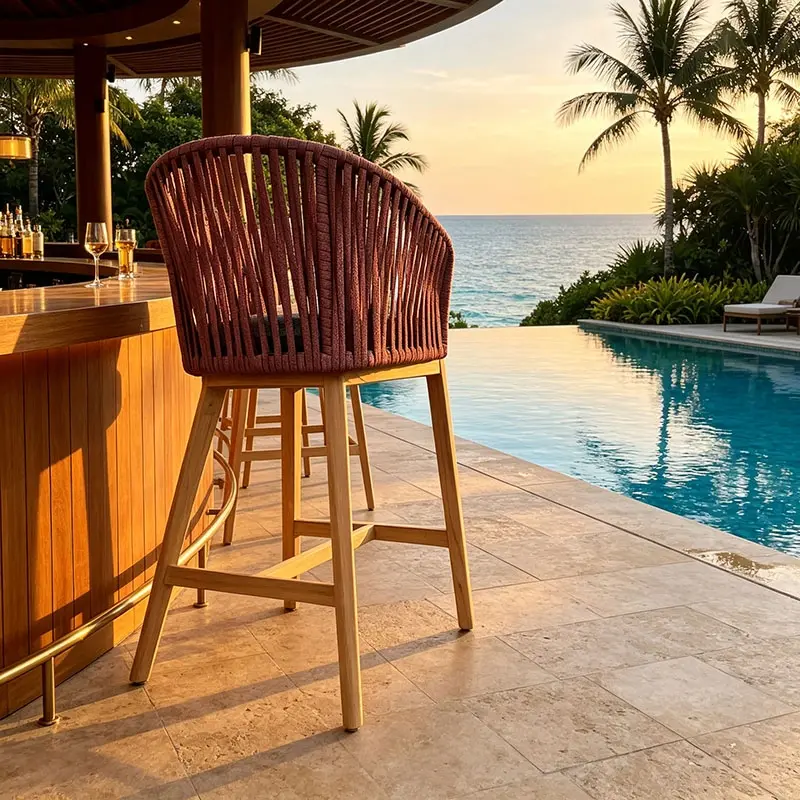
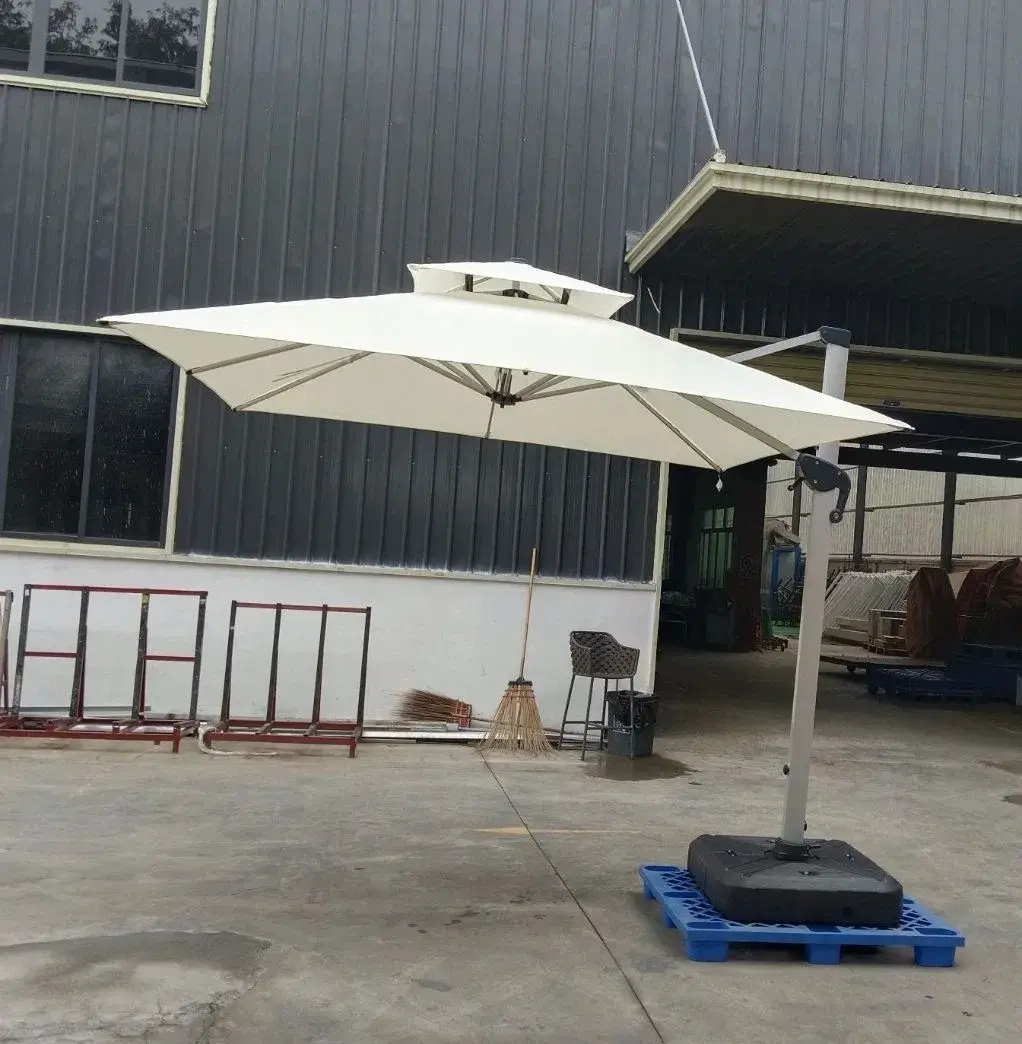
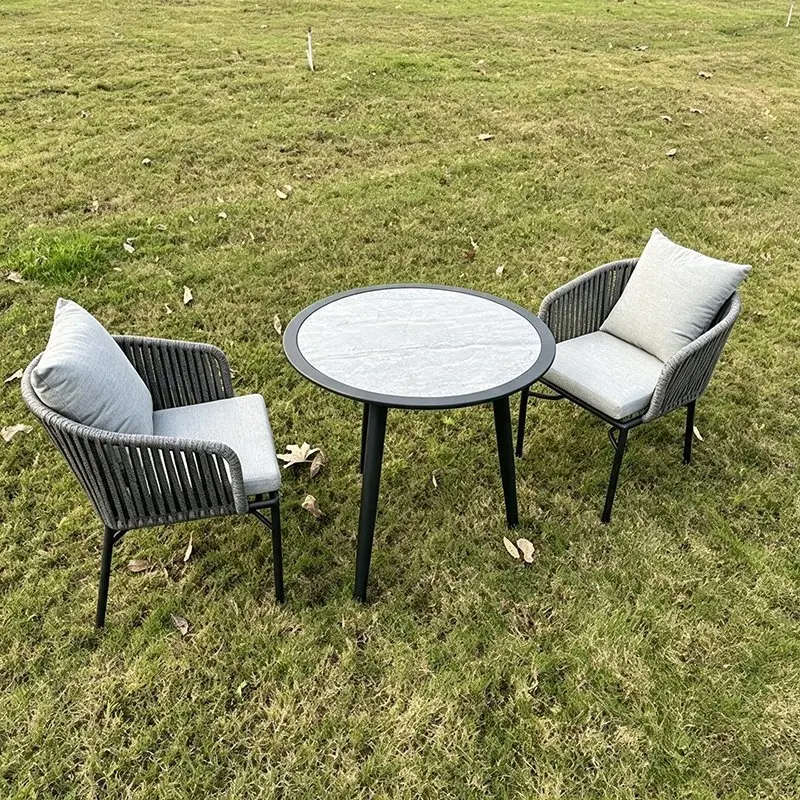
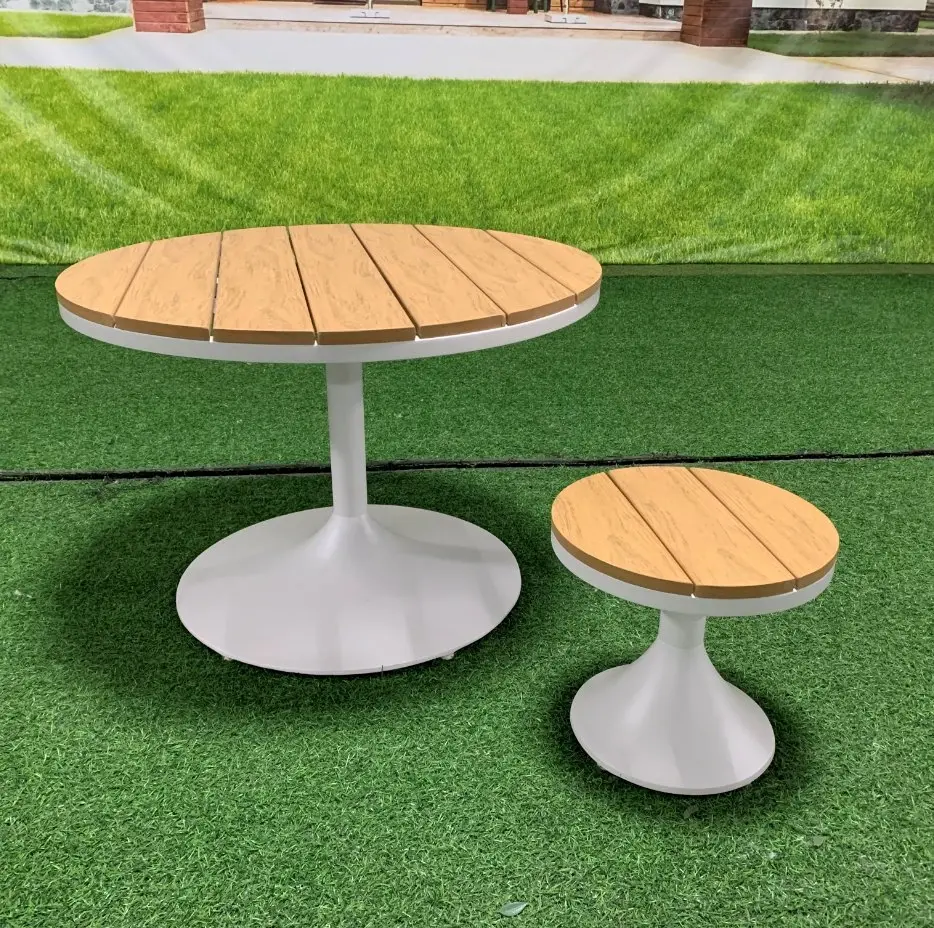
Three of them. Powder coated aluminium does not rust and stays light enough that one person can move a set off a terrace, which is why it carries most of this range; the coating is the part that fails, so ask whether it is baked on or sprayed cold. Solid teak carries enough oil of its own to be left untreated, and weathers from honey to silver grey without losing strength, which customers read as damage and is not. Synthetic rope over either frame lets water through instead of holding it, which is why it is the poolside specification. The one to avoid outdoors is powder coated steel: wherever the coating chips it rusts outward from the chip.
The EU Deforestation Regulation covers furniture, not just sawn timber, and it applies from 30 December 2026 for medium and large operators and from 30 June 2027 for small and micro ones. It requires a due diligence statement showing the wood did not come from land deforested after 31 December 2020, with the geolocation of the plot it was cut on. Teak is the commodity in this range that it touches. Ask the factory for the species, the country of harvest and the plantation documentation before you place the order rather than after the container is loaded, because the paperwork has to follow the wood and cannot be reconstructed at the port.
Because it is mostly air. Freight is charged on cubic metres, and a sun lounger or a canopy daybed takes several times the cube of a dining chair at a similar price. Nearly everything here ships knocked down for that reason. Before comparing two quotes, ask for the packing list with carton dimensions per piece: at this end of the range that number moves the landed cost more than the unit price does.
Far less, and that is the reason this category is worth starting with. There is no equivalent of the plumbing approvals: no cUPC, no WRAS, no per country water listing. What does apply is general product safety, which in the EU means GPSR and a responsible person inside the union, and in the United States means the CPSC general duty rules plus a California Proposition 65 warning where one is owed. If a piece uses plywood or MDF anywhere, CARB Phase 2 and TSCA Title VI apply to that panel for the United States; solid teak and aluminium are outside both.
One product line across two or three pieces, not one of everything. Minimums in this range run from a single canopy daybed to two hundred balcony sets, and they are set per product rather than per supplier, so the cheap lines are the ones that lock you into volume and the expensive ones can often be bought singly. A first container usually mixes a seating range with loungers, because the loungers fill the cube that stacked chairs leave.
By volume, in cubic metres, not per item. The quote carries the figure for your quantity and your port, because the same order costs less per unit as it fills more of a container.
It varies by product and each listing shows its own. Many items ship from a single carton; the unit price falls as the volume rises, and a full container is where the freight per unit stops mattering.
No. The site takes no payment and holds no deposit. A request for quote creates no obligation, and nothing is charged until terms are agreed directly with a sourcing manager.
No. Every figure here covers the goods and the sea freight to your port of discharge. Import duty, clearance and inland delivery are paid by the buyer on arrival, and the rate depends on your country.